A global platform for five distinct distributor types.
I co-architected a global product that adapts a single platform to five distinct user types — from a Day-1 prospect with no downline to a 21-year veteran managing 3,400 distributors. MyHerbalife serves 4.5 million independent distributors and Preferred Members across 90+ markets.
The work was designing one coherent system instead of five separate platforms, against a domain where the user types diverged on expertise level and operational workflows.
The IA decision.
FIG. 01 · V1 → V4 navigation framework.
The architectural principle: organize navigation by intent, not by entity, audience, or feature category.
It took three rejected versions to land there. V1 put everything under "My Business" — one bucket for everything from onboarding to downline analytics to inventory reporting. V2 separated Shop Products but left the same pressure on operations. V3 split by external versus internal lens (My Organization, Business Management) and failed because distributor work blurs those two: managing a downline is both external relationship and internal operation. Each version was organized by a sensible taxonomy that didn't match how distributors actually thought about their work.
V4 reorganized around user intent. Shop Products and Site Builder for transacting. My Business for operations. Engagement Tools for relational work. University for learning. Events & Promotions and Nutrition Clubs as standalone contexts. A distributor doesn't think "I need a tool from the internal-operations category." They think "I need to follow up with a customer who hasn't reordered in 60 days," and V4 is the navigation that matches that.
When Wellness was introduced as a new feature area late in the project, the new feature slotted under Engagement Tools without IA renegotiation. An architecture organized by intent is forward-compatible with features that don't exist yet.
One platform, five experiences.
Derrick
NEW
Adam
Monica
Cam & Lisa
Olivia
MATURE
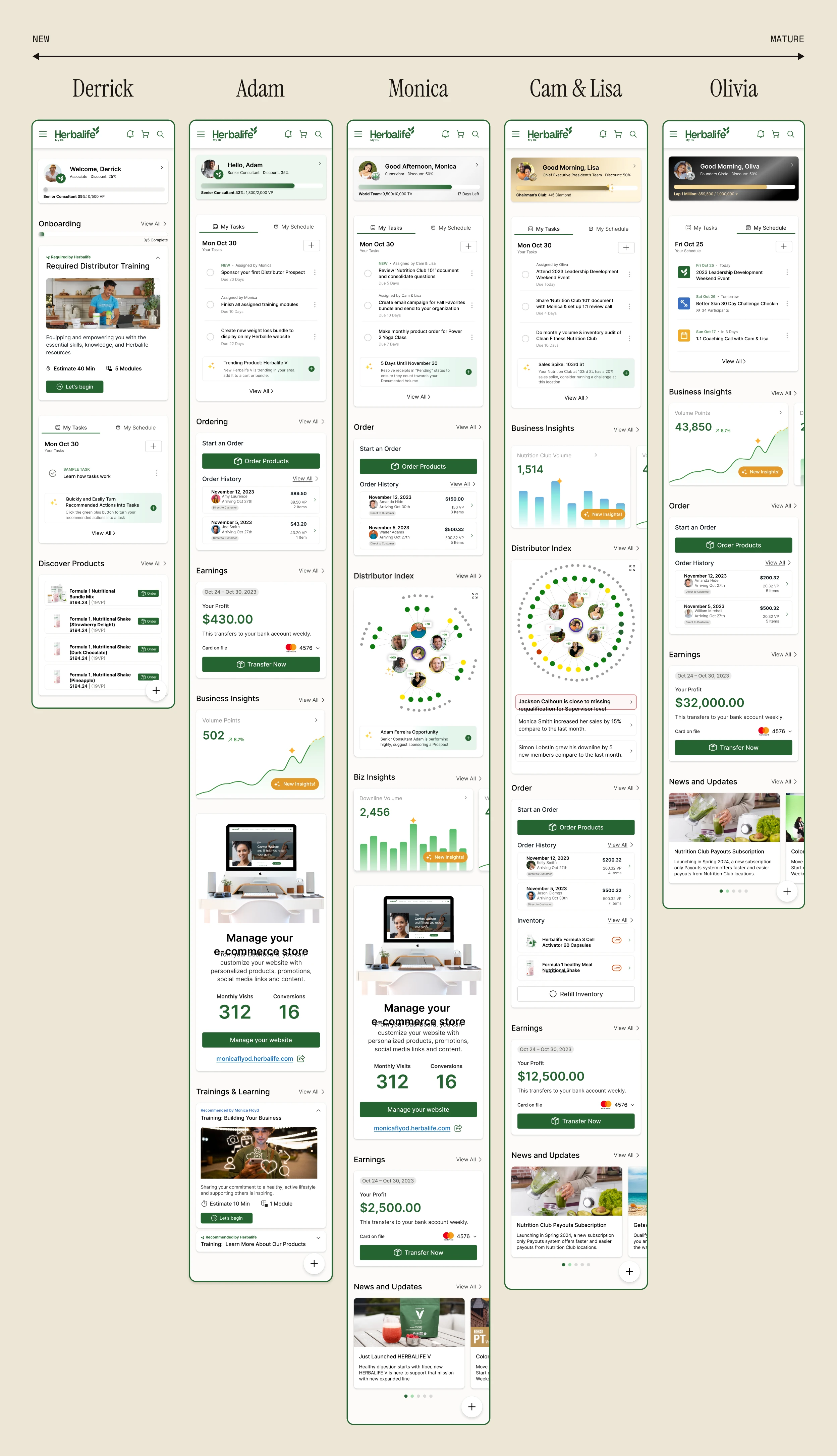
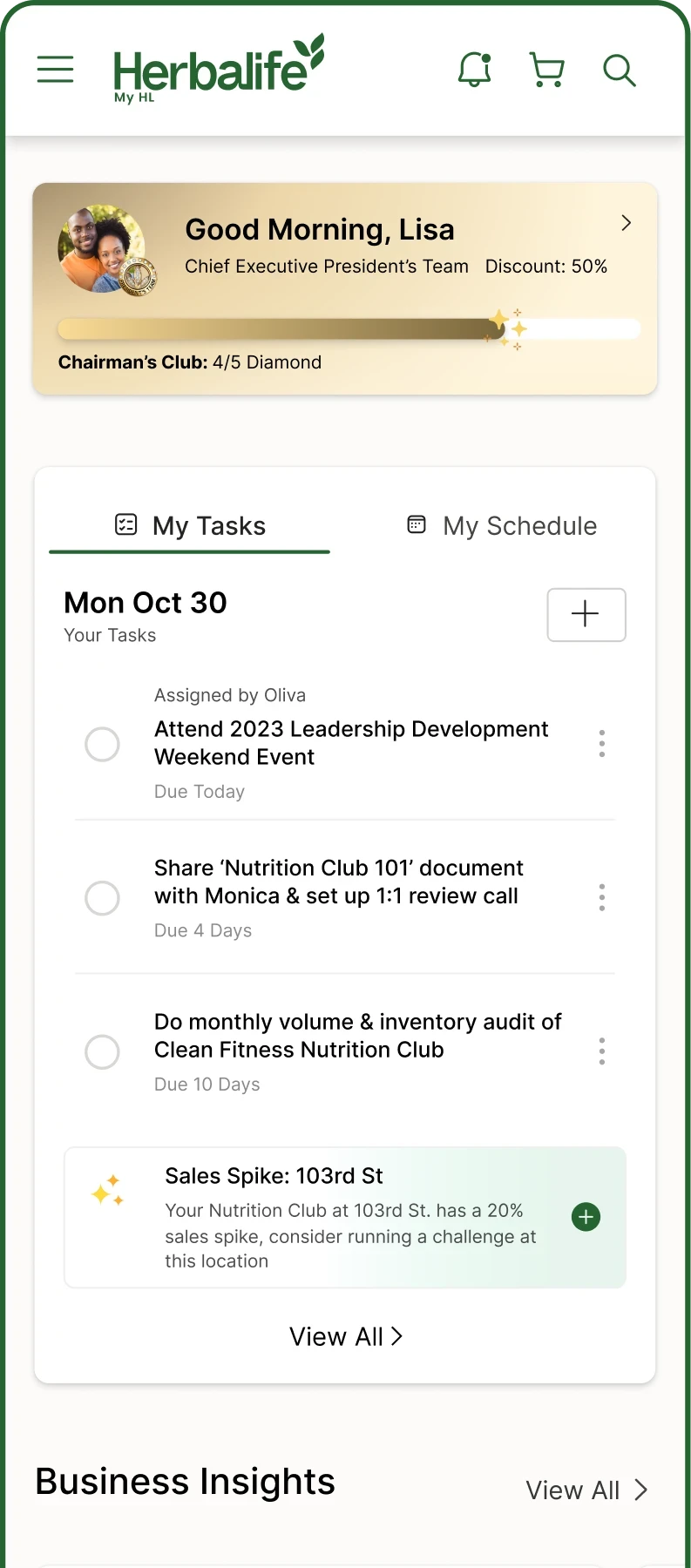
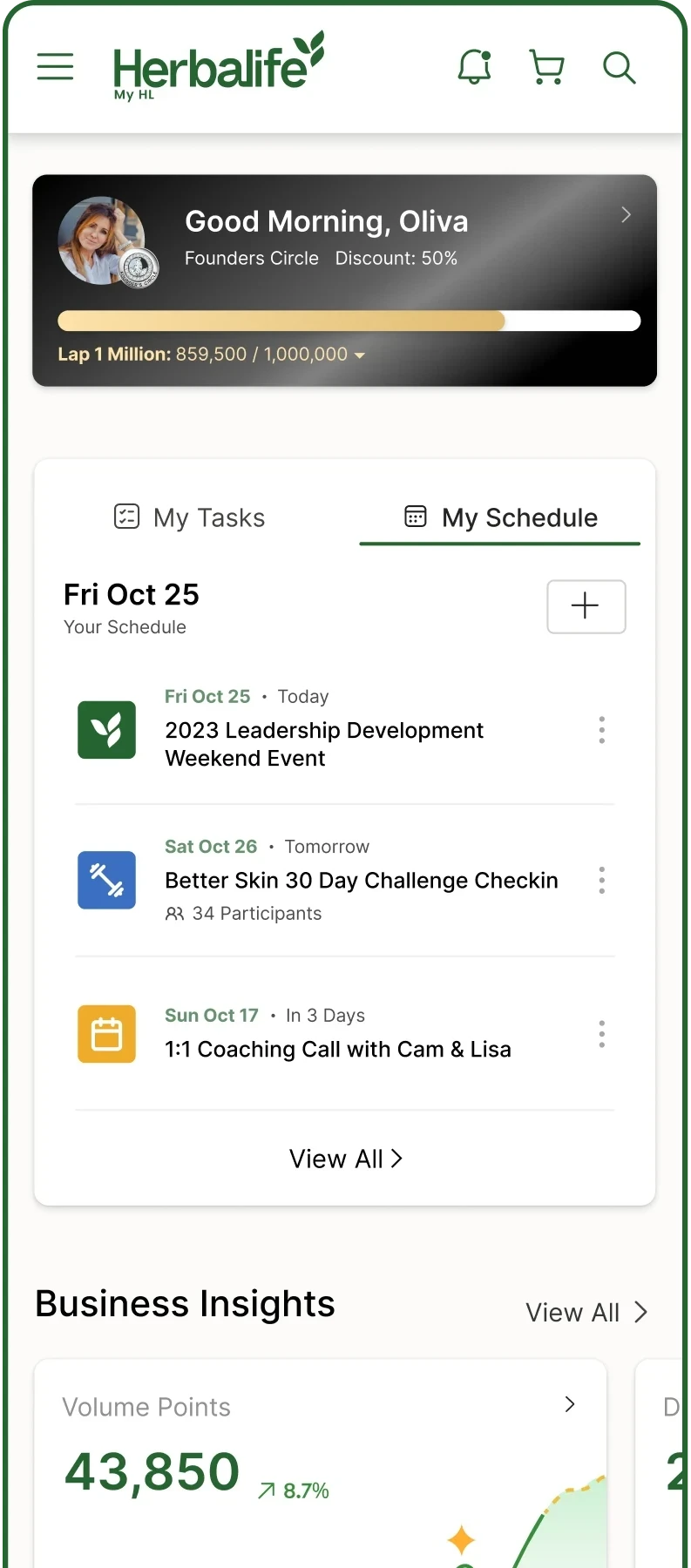
FIG. 02 · Five persona-tuned mobile dashboards on one underlying system.
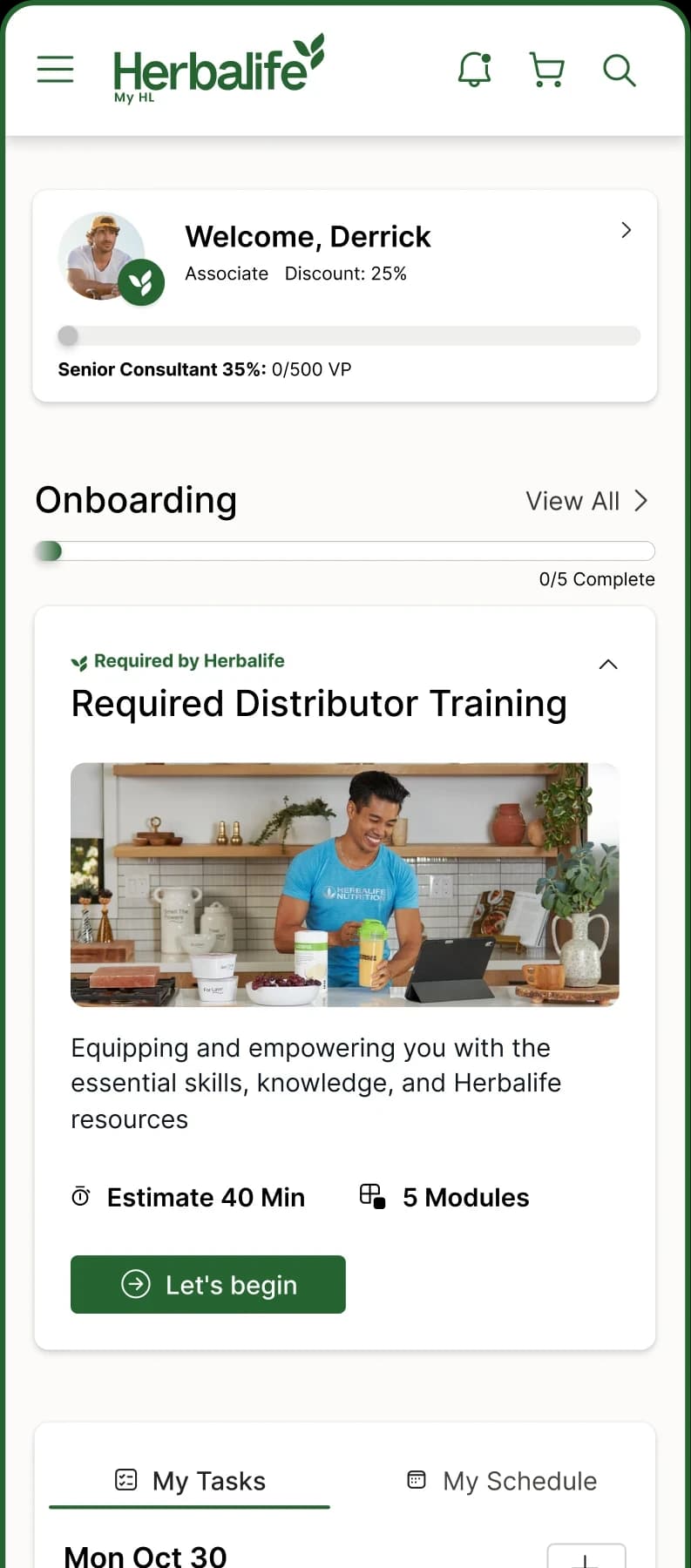
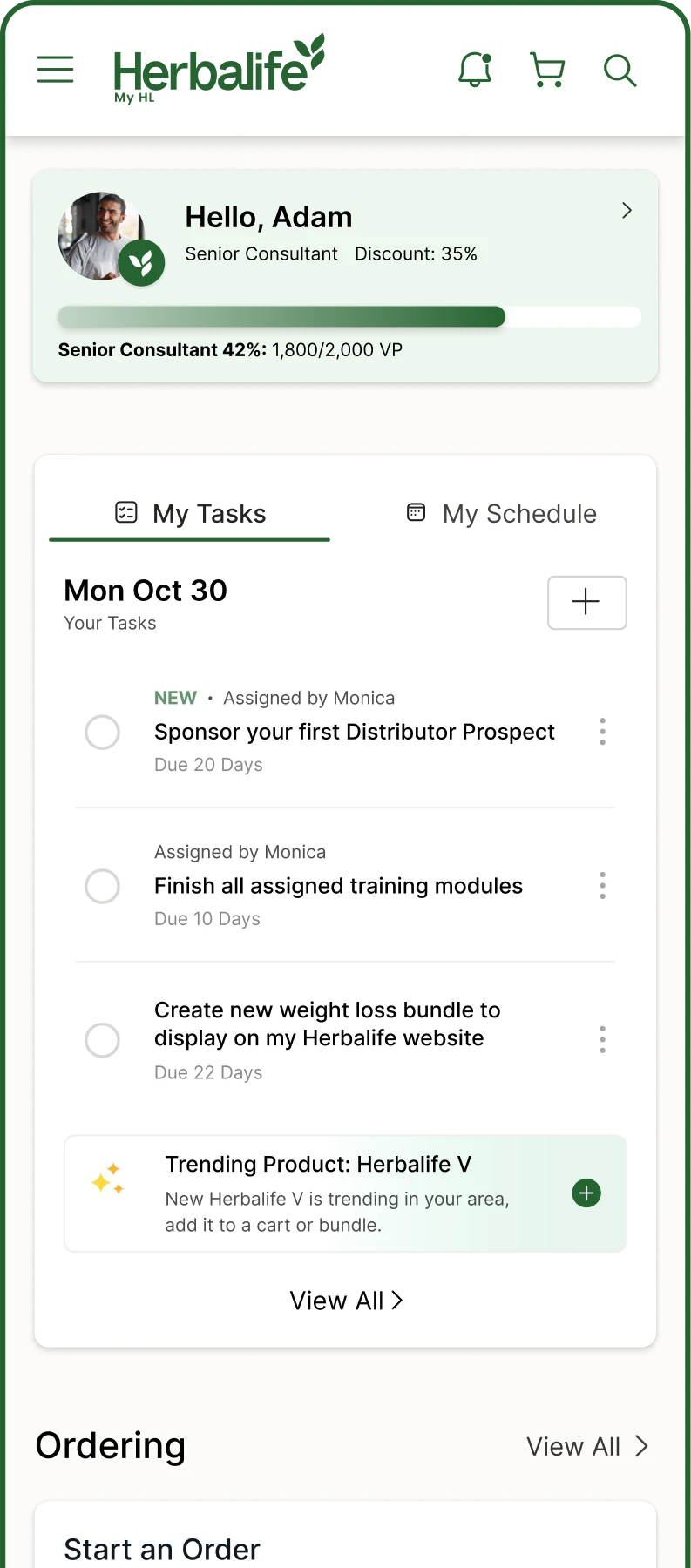
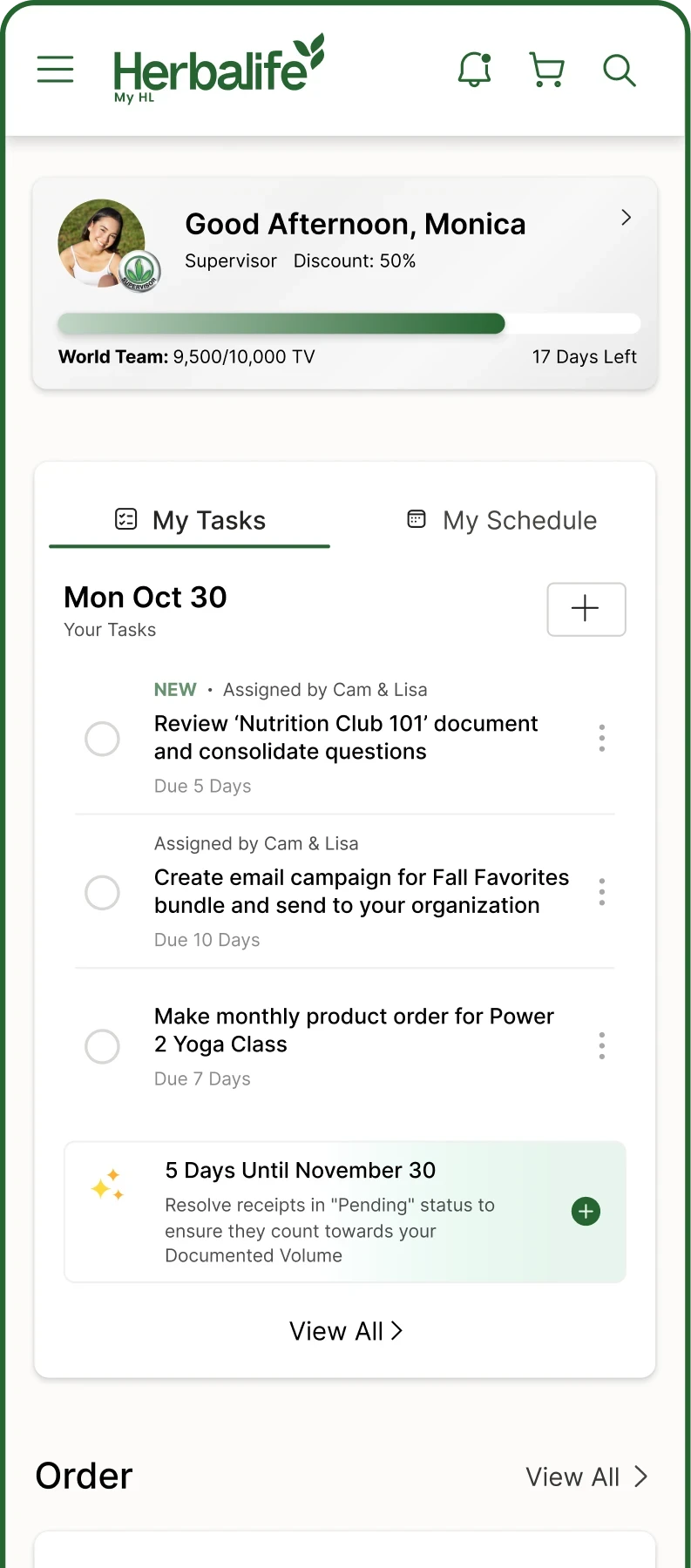
Five persona-tuned dashboards, one underlying system. Derrick (Prospect, Day 1, downline of 0) sees onboarding and progress tracking. Olivia (21-year veteran, Founder's Circle, 3,400 distributors) sees downline performance, business analytics, and order operations at full weight. The three personas in between pull combinations matched to where they are in the journey.
This isn't theming on top of a single product. The IA was designed so that persona-tuned surface composition was a first-class property of the system. Feature priority maps, developed through workshops I co-led with the other pod leaders and our Group Creative Director alongside stakeholder research, governed which modules surfaced at which weight per persona. The architecture's job was making those priority maps load-bearing rather than cosmetic.
The result: a Day-1 prospect and a two-decade veteran on the same underlying product, without the prospect being overwhelmed or the veteran being patronized.
Role & scope.
Co-architect of the platform alongside two other pod leaders, reporting to the Group Creative Director. I led a four-designer pod owning Information Architecture, Navigation, Business Insights, Contact Management, and Growth Tracking.
The IA work is where my individual contribution is sharpest: the V1 to V4 iterations and the intent-based principle that landed. The dashboard system and feature priority maps were the pod's work, developed through stakeholder workshops with 60+ participants across three global regions.
Engagement ended at handoff. The deliverable was the architecture: the IA, the persona-flex system, and the principle that made both forward-compatible, delivered as the foundation for Herbalife's distributor platform roadmap.
Full case study deck available on request.